
9 tips to make quilting more sustainable – what to consider about eco-friendly quilting!

In United States’ history, sewing a quilt was rooted in practicality, with pioneers using old feed sacks and clothing to make blankets when yardage was expensive and hard to acquire. These days, according to the Craft Industry Alliance article “The Size of the Quilting Market: Quilting Trends Survey Results 2022”, quilting has evolved into a billion-dollar industry, with a vast sea of regular new fabric releases, gadgets, and gear. Thinking about the impact of quilting on the environment doesn’t have to be boring or anxiety-producing and I’m sharing some easy tips for making quilting more eco-friendly!

If you like this post, check out these others while you’re here!
- How to save money while sewing
- How to make a quilt from old clothes – 10+ ideas
- How to mend a hole in a quilt with applique
- 30+ of the best fabric scrap projects
Pin this post about making quilting more sustainable with this link or image:

Why Does Sustainability in Quilting Matter?
According to the latest (2018) statistics from the Environmental Protection Agency in their article “Textiles: Material-Specific Data”, 17,030 tons of textiles were generated. Out of those 17,030 tons, only 2,510 were recycled with the remaining 14,520 burned or trashed. While this figure doesn’t separate out fabric intended for sewing vs. finished garments or bedding, it is clear that massive amounts of fabric are crowding landfills!
Considering sustainability in quilting can affect that problem in two ways. First, by reducing purchasing yardage on the front end, fewer resources like water and electricity are used with fewer carbon dioxide emissions. The same is true when using upcycled materials to quilt with since they don’t require any resources at all to create. Second, by using upcycled materials, fewer tons of clothing end up in the waste stream to be burned or buried.
When asked about how using upcycled materials in quilting felt meaningful to her, sustainable quilting enthusiast and activist Erin Bauchan-Caprara, @seamrippersociety, shared: “ While I have always enjoyed the thrill of the hunt involved with secondhand shopping, the importance of repurposing as part of my creative process becomes even clearer in the wake of natural disasters such as what we have seen with Hurricane Helene. Our actions as consumers directly impact the world that we live in and can either contribute to speeding up or stabilizing climate change impacts. I personally challenge myself to use at least one thrifted or repurposed material in each project to help do my part and I encourage you to give it a try as well.”
9 Tips for Making Quilting More Sustainable
The classic “3 Rs” can apply easily to quilting– reduce, reuse, and recycle! Making small changes and being more thoughtful about purchasing is a step in the sustainable direction. I don’t think there is any value in becoming “the sustainability police” and trying to audit the carbon footprint of each choice, but I do hope that at least one of these tips resonates with you and encourages you to make a small change in your quilting process to reduce the amount of resources going in or the amount of trash generated!

- Buy less new fabric. Social media is teeming with memes about having a huge fabric stash and how fabric shopping is its own hobby (see above for a screenshot off pinterest when searching ‘fabric’), but overconsumption to the point of having more fabric than could be used in a lifetime isn’t much different from a closet full of clothes. Simply buy less new fabric! Adding fabric to your cart and waiting 24 hours to purchase can clarify if it’s exactly what you need or want and reduce impulse buying.
- Buy fabric mindfully. “Fast fabric” bought cheaply is less likely to hold up well over time and more likely to have chemical dyes that are harmful for the environment. Consider looking at fabrics that are OEKO-TEX® certified, which means their production is less harmful to the planet and safer for human skin; you can visit OEKO-TEX®’s website to learn more. Quilters can also consider looking for fabrics dyed with natural pigments, small batch production artisans who print or dye yardage, as well as simply buying less and only when you need it. Shop your local quilt store instead of ordering off Amazon.
- Shop secondhand. There are several ways to buy secondhand fabric! In person, there are estate sales as well as creative reuse stores or sewing/craft focused thrift stores (search my creative reuse store list/map here!). Online, there is Ebay, Facebook marketplace, Etsy, FeelGood Fibers, or you can search for ‘deadstock fabric store’ and shop designer fashion line leftovers from a place like Fabscrap.
- Upcycle. Instead of purchasing fabric at all, consider using old clothes and sheets to make quilts! These can be purchased in lots off Ebay, thrifted locally, or you can ask for donations on your local Buy Nothing group. If you don’t mind a little digging, it is easy to find high quality cotton, denim, flannel, and linen to cut up and make a new quilt. Old sheets can also be great quilt backings and binding material, or even used in place of batting for a nice summer-weight quilt. I have great luck finding sheets and dirt cheap clothes to upcycle at my local Goodwill Outlet where you pay by the pound.
- Keep scraps out of the trash. Another aspect of making quilting more sustainable is reducing the amount of trash it produces. There are lots of scrap quilt patterns and tutorials out there, but if that isn’t appealing, consider finding a textile recycling site near you. 100% cotton fabric can be composted, and any fabric can be shredded up and used as filler for pincushions, footstools, and dog beds. Also think about asking a local preschool or art teacher if they can use fabric scraps as a makerspace material! This also applies for batting scraps – keep all the trimmings and turn them into a new sheet of batting with this by using a ‘franken-batting’ technique.
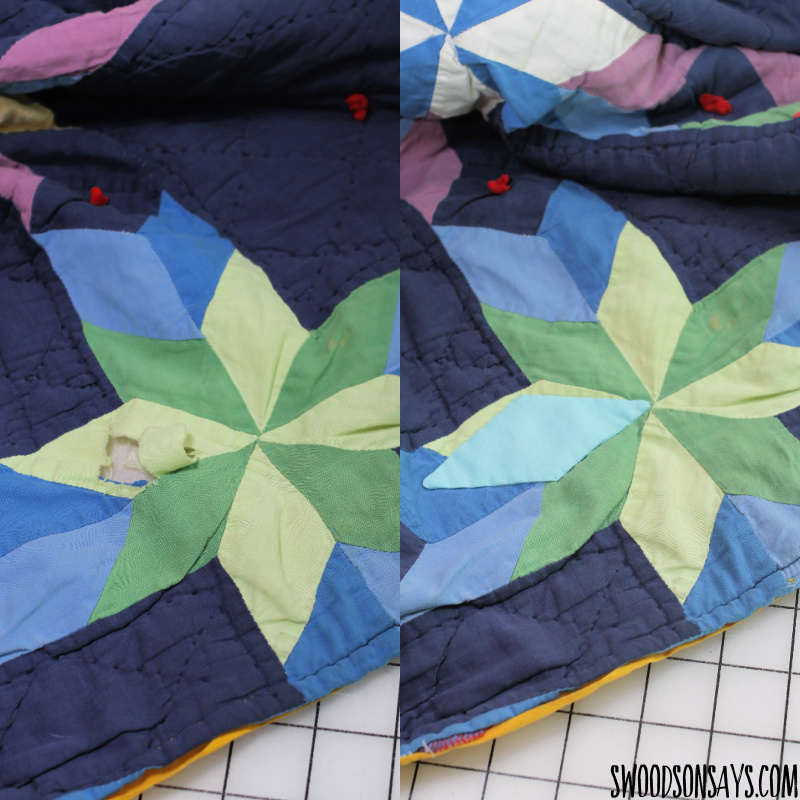
- Mend and upcycle. No matter how sustainable the original quilt’s materials were, mending an existing quilt and extending its lifespan is an important part of sustainability. Binding can be replaced, patches can be stitched on, and stains can be covered. Once a quilt is beyond repair, consider upcycling it into something new (maybe a pouf?) or selling it as a “cutter quilt” for another maker to reinvent it before trashing it.
- Rehome responsibly. This tip comes from Sarah Flynn, a textile artist/teacher/speaker who teaches a virtual and in-person lecture “Sustainable Quilting Unveiled”: “It’s okay to let it go. Whatever is weighing on you in your sewing space, like a quilt top that has been waiting for years to be finished, there are places and people who would love to have it. Donate quilt tops to charity sewing programs. Drop off unfinished blocks that you don’t want to finish to a local quilt guild’s free table. Organize a ‘cut it up’ challenge among sewing friends, where you swap unfinished projects with the challenge to cut them up and create something new with the materials.” These are all great ideas and far superior to dropping off unwanted fabric in the trash or a general thrift store, where it may have trouble finding a new home. Buy Nothing Groups and Facebook Marketplace are two other good spots to give away fabric!
- Consider natural materials. Did you know that polyester fleece is made from plastic? Using 100% cotton, linen, and wool avoids microplastics shedding into the water and keep your quilt compostable at the end of its life. Think about this when it comes to thread, batting, and backing as well as the fabric used to sew the top! Skip quilt basting sprays full of chemicals and use pins instead!
- Stay organized. Have you ever bought something only to get home and realize that you already have that ruler, fabric print, or marking tool? Creativity often breeds chaos, but keeping a list, directory, or photo album of what you have at home and then keeping everything organized in a way that you can find it easily, will help you avoid duplicate purchases and be more sustainable!
Is there a tip that I’ve missed? Leave it in the comments and share with others!
Jerilea
Saturday 15th of November 2025
Great tips. I love going to thrift stores for vintage fabric. Garage sales can also be good sources for fabrics, lace/trims and other sewing notions.
Bonnie
Monday 20th of October 2025
I recently needed fabric for a bag lining and I used sheets and pillowcases from my donate pile (that, let's be honest, nobody was going to want anyways!). We also had a grill cover that came in a zippered bag (why?!?), but I seam ripped the zipper off and used it on the same bag! Yippee :)
Laura
Friday 17th of October 2025
I am wondering if anyone has tried using old t-shirts as light weight batting. How do you think this would work?
Stephanie - Swoodson Says
Sunday 19th of October 2025
hey Laura! I have used a flat sheet as "batting" twice now and I really like it, it's a perfect summer weight quilt. I haven't tried piecing tshirts together - my first thought would be that the seams might be kinda visible without any true batting, if that makes sense? I wonder if you could zig-zag the edges together, flat, to avoid that. Let me know if you try it!!